Hypos! Bite me!

I couldn't find a Little Miss Grumble, so let's pretend I'm Mr. Grumble.

Hypos, short for hypoglycaemia, happen when your blood sugar levels drop below a certain number and your body and brain have difficulty functioning because of the lack of fuel (sugar). My symptoms usually start with a racing heart and the “shakes”. They are the bane of live for people with type 1 diabetes.

I have 18 years of experience in hypos and I have found that the ones that happen shortly after a meal, where I have overestimated how much insulin to take, are the most difficult ones to deal with. These are the ones that force you to stop in your tracks.

I had one of these hypos the other day. I was going about my afternoon chores; folding laundry. I know very mundane. I felt it coming on so I got up and had a little something. I went back to my laundry because it’s not very taxing physically and usually I can continue whatever I’m doing with my hypos. But on this occasion, there was no sign of my symptoms going away, so I decided to test and see what exactly I was dealing with. My blood sugar level was 3.1mmols; this was after a double treatment and my symptoms were getting worse; the sweating kicked in. When the sweats kicks in its time to stop what you’re doing and tackle.

I had injected insulin with my lunch less than two hours before, so the insulin was just peaking.

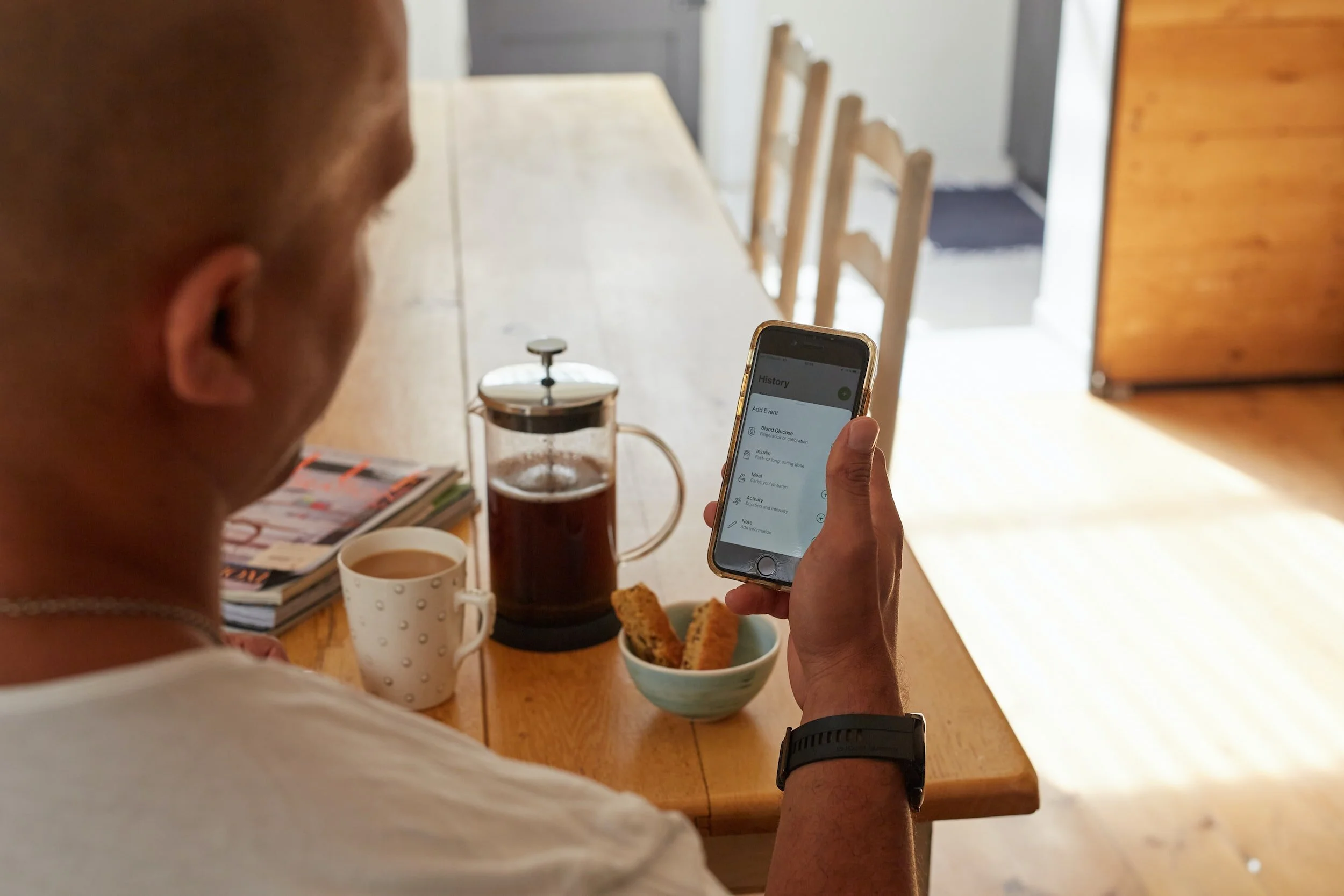
So I sat in the big comfy armchair surrounded by laundry with a cup of coffee and a little something-something (not the correct treatment for a hypo but did the job just the same;-) but thinking how much nicer this treat….ment would be if I could have finished the laundry first.

Children with Diabetes Deserve a Better Service.

Last year, I became a Diabetes Advocate with Diabetes Action. Huh!

OK, I’ll back track a little.

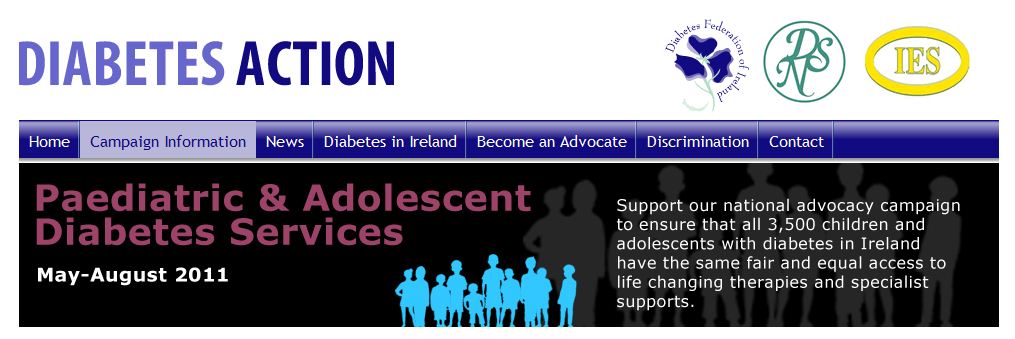
Diabetes Action is a group who is lobbying both the government and the HSE to improve health services for people with diabetes. They work by enlisting the support of people like me, who have diabetes, to log onto their website; www.diabetesaction.ie and with a few clicks send a prepared email to our local TD’s and Senators.

When the TD’s receive multiple copies of these letters they are prompted to raise the issue in the Dail. In the meantime, Diabetes Action sends letters to all of the national and regional newspapers in the hope that they will publish our stories and bring diabetes into the mind of the general population. As a local advocate I would contact the local media providing them with local statistics and fact relating to the campaign and encourage people to support the campaign locally.

The combination of the efforts of people with diabetes, Diabetes Action and the TD’s, strongly encourages the policy makers to implement the proposals put forward by Diabetes Action and improve the Diabetes Health service.

“If the correct policies are implemented, we can dramatically improve the health of people with diabetes and save hundreds of millions of Euros in funding over the next 10 years”

So now you know how it works let me tell you a little about the current campaign which targets the services for Children & Teens with Diabetes.

The following is the press statement from Diabetes Action 4th May 2011

Children & adolescents unable to access diabetes innovations.

Diabetes Action, an advocacy group for improved diabetes health services, says that hundreds of children and adolescents with diabetes can’t access advances in care such as insulin pumps because local paediatric diabetes teams in hospitals around Ireland are under resourced.

“New treatments that control blood sugar and insulin levels are available, but patients need to work with a specialist diabetes nurse and dietician to access this care and paediatric diabetes teams outside of Dublin rarely have the resources to offer these new treatments” she says.

This often leads families to seek a referral to one of the three Dublin hospitals offering intensive treatments like insulin pumps, requiring time off school, off work and causing a separation from the care provided by the local diabetes service team.

“Dublin hospitals are inundated with referrals of children and adolescents with diabetes from the rest of Ireland, our services are under constant pressure. There is need for national reorganisation to provide the latest treatments in more hospitals” says Dr. Colm Costigan, Clinical Director for the 3 Dublin paediatric hospitals and former chairperson of the Expert Advisory Group on diabetes.

To tackle this, Diabetes Action is seeking the reorganisation of existing paediatric diabetes services into 8 regional networks, with the Dublin network acting as a tertiary hub of excellence.

“Services would continue to be delivered at existing hospitals” according to Prof. Hoey “but we’re asking for each network outside Dublin to be staffed by just one additional diabetes nurse specialist and one dietician to support future access to new treatments for diabetes across Ireland”.

The cost of this reorganisation is €750,000 (for 7 nurses and 7 dieticians) but international studies have shown that improved control of diabetes in children and adolescents can lessen the development of costly complications in adulthood by as much as 76%.

“At present 50% of children and adolescents with diabetes develop some form of long term diabetes complication by the time they reach adulthood; these complications are extremely costly to manage. We can dramatically improve health outcomes and quality of life with a very modest investment and a reorganisation of services” says Prof. Hoey

How do you give your support?

Diabetes Action could not have made this simpler.

Log onto the website , follow the prompts that bring you to a prepared email with local information. Add your name, address and email to the document and click “preview” if you would like to add your own comments, and then click “send”.

If you want to do more you can spread the word to as many people who are affected by diabetes as possible encouraging them to support the campaign. This means Grandparents, Aunts, Uncles, Friends, etc.

These families with diabetes need your support!

Where are the Irish Diabetes Role Models?

Nick Jonas

Halle Berry & Nick Jonas have been used as Diabetes Role Models some many times that I’m kinda tired of it. I don’t mind Nick Jonas so much because he’s doing his bit as a public figure for Diabetes Advocacy but as an almost 40 year old woman I can’t relate to him. As for Halle Berry, well, ever since that whole debacle about how she weaned herself off insulin while pregnant, her credibility is in the toilet.


Yes, there are many, many more celebrities with Type 1 diabetes but these are the two that are most commonly used.


Wouldn’t it be nice to have people with Type 1 Diabetes closer to home to aspire too? I just want someone famous who is Irish and who is the complete opposite of what the public perception is of diabetes. An image I can show people who give me their pitiful face when they discover I have Diabetes that it’s not a life of pain and misery.

Surely, amoung the 20,000 Irish people with Type 1 Diabetes there are a few celebrities who would speak up on our behalf?


Are they hiding? Why would they hide? Should I be hiding too?

 
This is what we do have and I suppose it will do for the time being.

American Spokespeople on Diabetes Awareness

  • Nick Jonas, pop star
  • Miss America 1999, Nicole Johnson
  • Mary Tyler Moore, actress
  • Bret Michaels, lead singer of the rock band Poison
  • Sharon Stone, actress


UK Spokespeople on Diabetes Awareness

  • Steve Redgrave, Olympic rower
  • Philip Schofield (mother & brother with Type 1)
  • Lucy Davis from “The Office”

Irish Spokespeople on Diabetes Awareness who we appreciate but have Type 2
  • Gerald Kean
  • Karl Spain
  • Ian Dempsey

 Irish Public Figures who have Type 1 Diabetes.  
  • Mary Banotti, former MEP
  • Pat Carey TD from Kerry
  • Catherine Brady, world champion kickboxer
  • Kenneth Sweeney, former senior county footballer; Sligo

Doing it for Diabetes!!! Volunteers needed

I know - its fun run season and there’s a 10K organised in your area every single weekend from now until October. The sponsorship cards are being thrown at you from left, right and centre. And I know that I’m adding to that long list of charities that need & deserve your cash.

But I’m still asking and hoping that you will join me.

The Clare 10K takes place on Saturday, the 25th June in Lees Road Sports & Amenities Park. I am looking for volunteers to walk with me (or run ahead:-s) and raise money for the Clare branch of Diabetes Ireland.

Diabetes Ireland Clare branch tries to fund raise only a couple of times a year so as to not make lots of demands on your pocket.

Why does Diabetes need money?

• 440 Irish people will die every year because of Diabetes (from CSO 2006 census).

• 314 Irish legs will be amputated because of complications of Diabetes this year (from Diabetes Action podiatry campaign).

• Study after study shows that if people with diabetes are provided with structured education on how to manage their diabetes that it reduces their risks of developing the diabetes complications that lead to death.

• People with diabetes must deliver 95% of their own care, it is of paramount importance that they receive on-going, high-quality diabetes education that is tailored to their needs and delivered by skilled health professionals.

• People with diabetes need peer support because a life time is feels like an eternity to live with a chronic illness.

Where will your money go?

Diabetes Ireland Clare branch provides;

• Support groups for all people with diabetes so that the old and the newly diagnosed people with diabetes can lean on each other.

• Diabetes Information Event where a medical professional imparts their wisdom on how to make life better with diabetes.

• Support for Diabetes Ireland’s national programmes; Sweetpea kids Club, Teen Activity Day, Structured education courses for people with diabetes.

Or you can decide where you want your money to go by ticking one of these boxes on your sponsorship card;

- Diabetes Ireland Education & Support Services

- Type 1 Research

- Type 2 Research

- Sweetpea Kids Club

- National Teen Activity Day

What do we need from you?

We need people to volunteer to participate in the Clare 10K on Saturday, the 25th June 2011. All the race details are published on www.clare10k.com Sponsorship cards and t-shirts are available by contacting me on mobile 087 641 5747 or by emailing me at clarebranchdfi@gmail.com

If you are unable to volunteer you can sponsor someone who is. You can sponsor me through my fundraising page on http://www.mycharity.ie/event/grainne_flynns_clare10_2011/

Using your credit or laser card.

Every cent counts for us and we would hugely appreciate your support!

You have been diagnosed with Diabetes, so what next?

On the 2nd April 1993 I was diagnosed with diabetes. This year marks 18 years of living well with D. Coincidently, the 2nd April is my daughter’s birthday, so for the last seven years I don’t actually remember that I’ve clocked up another year until afterwards.

But I do remember most of those first days. I spent 10 days in hospital. I remember the confusion and the wonder and my complete and utter ignorance about what was happening to me and my inability to comprehend it all.

I was being told that I could live a normal healthy life so I figured I wouldn’t worry about it all.

But then I returned to the world to live my “normal healthy life” and it wasn’t as easy as it was before. I had hypos all over the place, and if it wasn’t low blood sugar it was high blood sugars. Back then I was on twice daily injections and having to eat meals and snacks at specific times during the day. It was hard and I was only just able to keep my head above water.

I didn’t think anyone out there could help me so I didn’t talk to anyone about my diabetes. People would ask “how is your diabetes?” and I would say “fine” and change the subject. I cried myself to sleep almost every night for a couple of months because I couldn’t figure out what I had done to cause this diabetes.

But I got over it and I turned it all around. I learned about my diabetes and I realised that I needed to take care of it and it would take care of me.

When I think of the many people who are being catapulted into the Diabetes Community these days I feel those early days again and I do everything I can to let them know that they are not alone.

Unfortunately, there isn’t a 12 step plan that tells newly diagnosed people with diabetes what they need to do next after diagnosis. However, I did come across something in a borrowed copy of Outsmart Diabetes, Rodale Publications. The section was titled “Taking on Diabetes”.

And here is the outline:

Get Confirmation of whether you have it or not.


Go to the doctor or healthcare professional and ask to be tested for diabetes. If the test is positive, make sure you have your blood sugar, blood pressure and cholesterol checked also and a foot and eye examination.


Take time to fully digest what you have been told.


If you are diagnosed with diabetes, take the time to fully absorb what you are being told. Don’t make assumptions or hasty decisions. The only way you will take control of your situation is with a clear head.


Find out the facts for yourself.


Look to the internet, your local library or contact one of the many organizations for more information. In this case it’s true that knowledge really is power.


Work out how those facts apply to you.


Once you’ve gained a good all round understanding of diabetes, focus on the particular type that you have, and with this knowledge work out how you can make your life easier.


Prepare yourself for your next conversation with your doctor.


Arrived armed with information and you will know if you are being sold short or misdiagnosed. There is no reason why your doctor shouldn’t welcome your contributions. Also, if you know what you want to talk about you will probably get a much better service.


Accentuate the Positives.


If might not, at first, seem that there are too many. But if having diabetes means you can no longer carry on making excuses for not eating healthily or doing exercise, then that has to be a bonus.

Start making lifestyle changes


Go forward with whatever adjustments you have t make to your life with gusto and as if they were your idea. Think they are only being made to improve your quality of life.

Don’t Worry.


Stress can only make your condition worse, as it can trigger surges in blood sugar. And besides, worrying never changed anything!

And that goes from me too. It's not a perfect step by step list but it's something.

And remeber it is what it is and all you can do is your best.