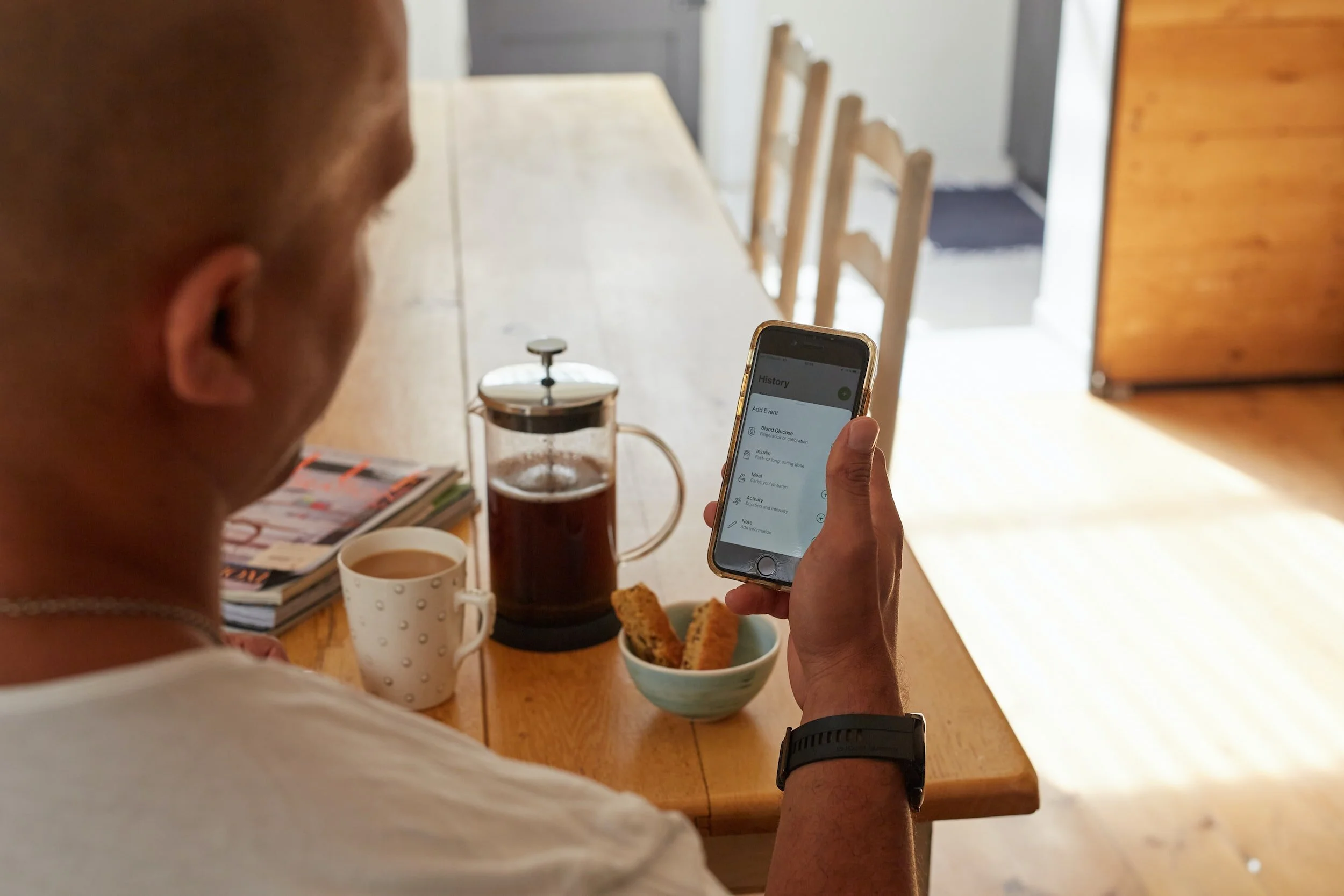
Two reasons; I was doing all the work that being on a pump involved; carb counting, testing my blood glucose 7 times daily and paying attention to the glycaemic index of food but my HbA1c results were not improving. They always hovered above the 7% and I decided that they should be better. And the second reason was that I was beginning to feel the aging process catching up with me through my lack of exercise but not wanting to introduce another variable into my routine, I avoided exercise and I found it difficult to plan exercise.
Can we change our way of thinking about our diabetes?
We (people with diabetes –PWD) feel jealous of every person who can eat sweets and cake with reckless abandon! We think a child being able to have so many sweets that they make themselves sick is all part of growing up!
We let others love us and rewards with cakes, biscuits and sweets!
What if we changed this way of thinking?
What if instead of thinking “my child can’t have sweets” we thought “other children eat too many sweets”? Why can’t we find it acceptable to act all smug and pious with all the people around us who complain about not have any self-control and moan about their weight issues? Why can’t we say “I eat healthy and I’m proud of it”? Why don’t we tell our children (with or without diabetes) that we love them too much to let them have loads of sweets and that we want to make sure that they grow up to be healthy people?
Why don’t we encourage friends and family to love our children with their time instead of a packet of sweets? What young child wouldn’t love to cuddle up with Granny or Granddad and read a book or have loved ones take them to the cinema or the park?
I have diabetes and I have one sweet thing every day after my dinner (except on special occasions), I don’t see it as depriving myself, I see it as living well. I’m going to try not to feel guilty about it. My children live by the same “rule of sweets” and I seriously hope that the anti-glutinous moral is sticking.
Would this way of thinking change the world – probably not, but it might make the everyday struggle with diabetes a bit easier. Maybe?
** I have made some generalizations in this item but I would like to acknowledge that I do know not all people with diabetes feel the way I describe in the early paragraphs.
Diabetes in Ireland-Happy St. Patrick’s Day
- It’s estimated that 200,000 people in Ireland have Diabetes.
- 20,000 people in Ireland have Type 1 Diabetes.
- 2,500 Children & Teens under the age of 19 have Type 1 Diabetes.
- On average 314 Irish legs will be amputated because of complications of Diabetes this year. (From Diabetes Action).
- 440 Irish people die because of Diabetes every year (from CSO 2006 census).
- There are 8 structured education programmes in Ireland for people with diabetes with limited access.
Type 1 Courses: CODE T1, DAFNE and BRUCIE
Type 2 Courses: X-PERT, DESMOND, CODE and ORLA
- There is one organisation which advocates for the Diabetes patient: The Diabetes Federation of Ireland (membership approx. 4,000)
- There is one organisation which is encouraging Diabetes research in Ireland: Diabetes Ireland Research Alliance.
- Thanks to the internet there are hundreds of blogs about diabetes that Irish people have access to and also a number of facebook groups and pages founded by Irish people.
Diabetes In Ireland Facebook Page
Cork Diabetes Parents Support Group
Mayo Diabetes Parents Group
http://www.mydiabetes.ie/?page_id=27
I know the above statistics do not paint a pretty picture for people with diabetes in Ireland but it’s important to remember that there are no statistics for the number of people who are living well with diabetes but there are lots of us :-)
Happy St. Patricks Day!
What if my children get diabetes?
When I was looking for research on what was in store for me when I got pregnant with my first child I came across discussions about where or not people with diabetes should have children.
It’s a genuine question, after all, there is a 2% risk (if you’re female and 6% if you are male) of passing Diabetes on to your children. The people asking it were people with diabetes and they were considering all the negatives and positives.
Some decided they didn’t want to take the risk and others never even considered not taking it.
So now I have my two wonderfully, healthy children but I still live with the concern that either one of them or both might someday be diagnosed with diabetes.
What would I do if this happened? I’ve thought about this a lot so I think I have a good idea of what I would do and feel.
First and foremost I would always feel the guilt that it was my fault they got diabetes and nothing would ever change that. It would always be there but that’s no way to live and I don’t need to have extra guilt loaded on me by my children so I would keep it hidden.
Then I would apologise to my child for the world being unfair.
Next, I would start teaching diabetes and build team “me & my child” and that’s the way it would be until my child decided that she wants to be more independent. But he or she will always be reminded that I am there and my experience is to be used for his/her advantage and vice versa.
Initially, (s)he would learn how to handle diabetes but eventually it would evolve into a learning from each other experience. So if the worst ever does happen – it won’t be the worst.
What advice would you give to a Newly Diagnosed Person with Type 1 Diabetes?
So off we went to visit the house of some people we vaguely knew. I left that house determined not to fall asleep that night in case I didn’t wake up. Thankfully, the next day I had my first appointment with a diabetes nurse (this was 1990’s Ireland remember).
I think that going to talk to people who had first hand knowledge went wrong because the wrong people did the talking. I didn’t know what to ask so I said nothing; the other person with diabetes was only 19 and didn’t say much either. So the “mammies’ were “have at it”.
Today, I’m quite often in the other position – the person who is sought after for comfort and I wonder to myself “Am I saying the right thing?” I’m also wondering “what do they want to hear, what are they looking for?”
I remember the isolation I felt in those first years after diagnosis and how angry I became at all things diabetic. I got off on the wrong foot without support and it took me about 7 years to find a way of dealing with my diabetes. So I’d like to do “a bit” to preventing others from putting that first foot down badly.
With this in mind I compiled a list of things I’ve said to others or things I’ve read that I’ve found true and motivational and maybe some people can add to this list for me.
• Diabetes can get you out of stuff you don’t want to do but it will never stop you from doing anything.
• You can be at war with diabetes or you can co-exist with it – Diabetes will always be there so you have to decide if it’s a friend or enemy.
• Handbags & backpacks will accompany you everywhere to carry your gadgets & supplies.
• Diabetes is life changing and there is a period of adjustment.
• You will become your own doctor, dietician and diabetes nurse because your diabetes team do not live with you 24/7.
What piece of advice did you receive that has stayed with you since you were diagnosed?
Aaahhh The Dreaded Appointment!
It’s because you know what you’re facing. The doctor will go through your Blood Glucose diary and highlight all of the high readings and then you will realise that there are so many of them. You then have to sit through the judgement and lecture that you’ve heard time and time again. You’d think the doctor would know by now that this tactic doesn’t work and that (s)he should try a new one.
I finally realised after I don’t know how many years that my doctor is supposed to help me not hound me. My attitude has changed; I prepare for my appointments now. I go through my blood glucose diary beforehand and walk into my appointment with my own opinion of what changes need to be made to my insulin regime and if my doctor thinks otherwise they have to convince me of it.
If I feel that my doctor is not educating me about how to better manage my diabetes then I shop around. I mean if we don’t get a good meal in a restaurant then we don’t go back for more do we? Why should I settle for less where my health is concerned? (Aside; it paid off because I now have the nicest, supportive & competent doctor I’ve ever had).
What my change in attitude means is that there is a two way conversation about the management of MY diabetes and that I’m not pushed around. I understand that my doctor is depending on me to provide him/her with the information (s)he needs to serve me best and how can (s)he get that information if I don’t speak up?
The level of understanding we get from healthcare professionals is limited because not very many people with diabetes go into the profession – why is that? Maybe that’s a question for another blog entry?